
Uncategorized

The Indoor-Outdoor Great Room: How to Get the Transition Right

The Indoor-Outdoor Great Room: How to Get the Transition Right Indoor outdoor living design Los Angeles is a central focus of this article. Interior Conception brings this perspective…

Sarit Saruri
By Sarit Saruri Interior Conception Los Angeles Interior Design Studio
The Indoor-Outdoor Great Room: How to Get the Transition Right

The indoor-outdoor great room is one of the defining features of luxury residential design in Los Angeles. It is also one of the most frequently mishandled. When it works, the space feels like the house simply opens up, the air changes, the room expands, and inside and outside feel like a single continuous place. When it does not work, you get a nice view through glass and two spaces that never quite connect.

The difference usually comes down to four things: the door system, the threshold, the material continuity, and the ceiling treatment. Get all four right and the transition disappears. Miss one and it stays visible.
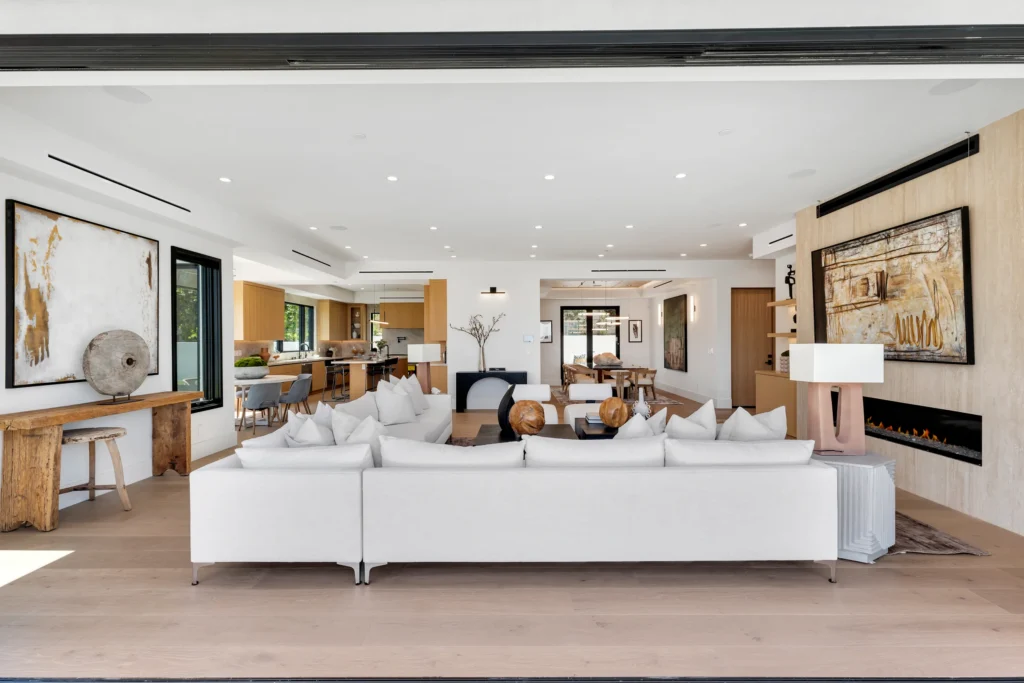
01 The Door System

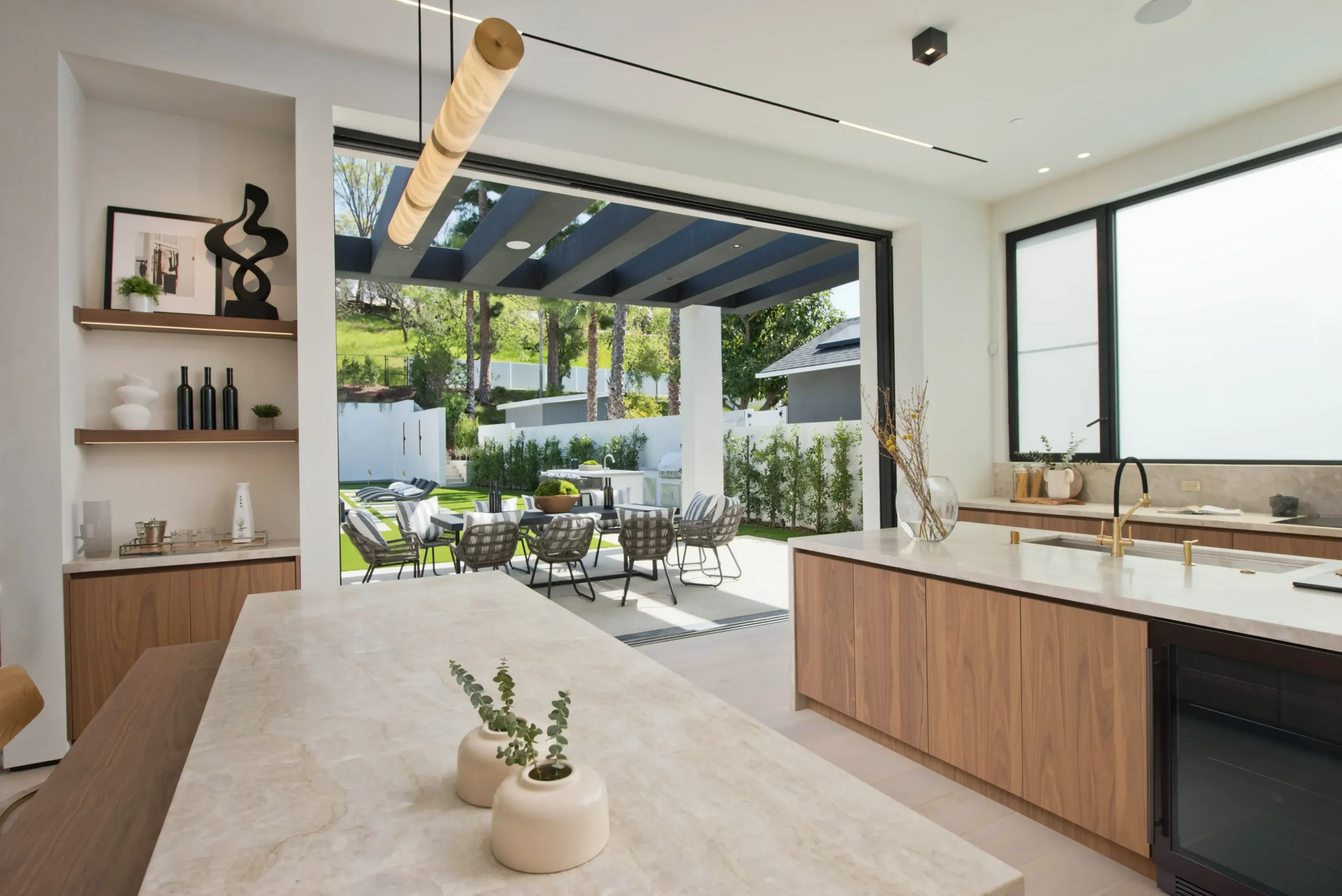
Large-format bifold or multi-panel sliding systems are the standard for high-end indoor-outdoor connections in the Los Angeles luxury market. The best systems operate smoothly, stack completely out of the way, and seal tightly enough to maintain HVAC efficiency when closed. Cheap systems do none of these things well and will frustrate you every day.

I consistently specify systems with a minimum opening width of twelve feet and prefer sixteen or more for great room applications. The pocket for the stacked panels needs to be accounted for in the wall design, which is a conversation that has to happen early in the architectural phase. Retrofitting a pocket for a bifold system into an existing wall is expensive and disruptive.

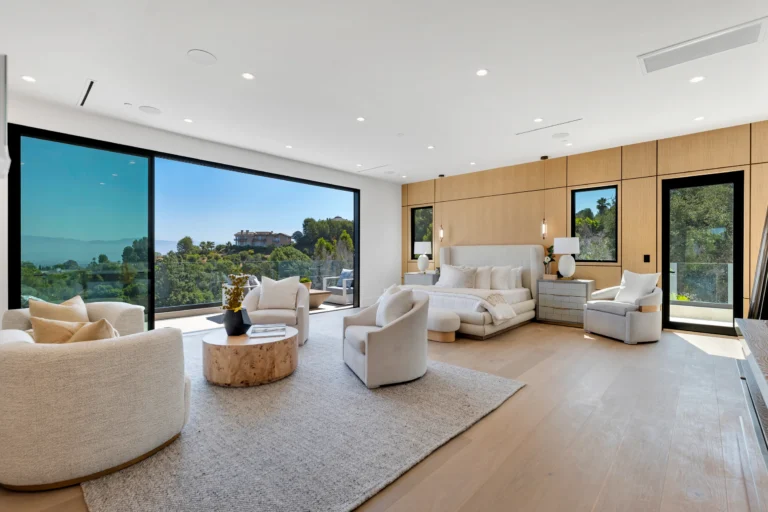
Living Room Design | Interior Conception | Encino, CA

02 The Threshold

A flush or near-flush threshold is not optional for a high-end indoor-outdoor connection. A raised track, a step down, or a change in flooring level at the door will break the visual flow every time. The goal is for the eye to travel from the interior floor to the exterior hardscape without interruption.

Achieving this requires coordination between the structural engineer, the door system specification, and the hardscape design. The exterior grade needs to be set at the right level before concrete is poured. This is another reason why the outdoor space needs to be part of the design conversation from the beginning, not added after the interior is framed.

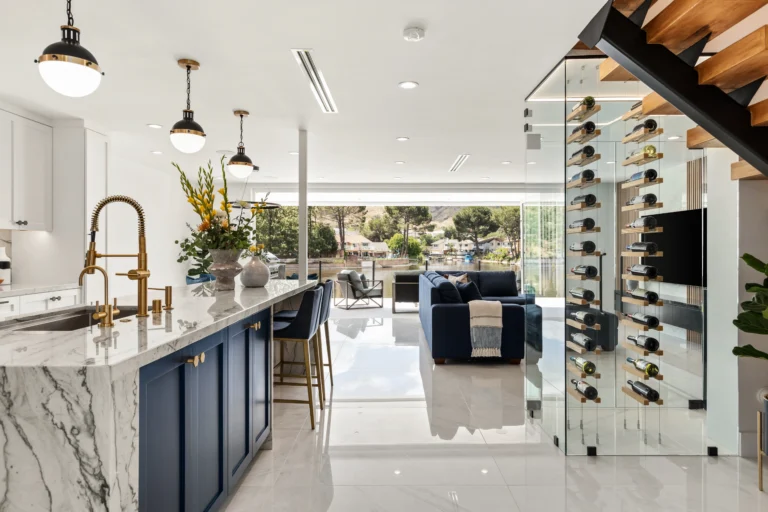
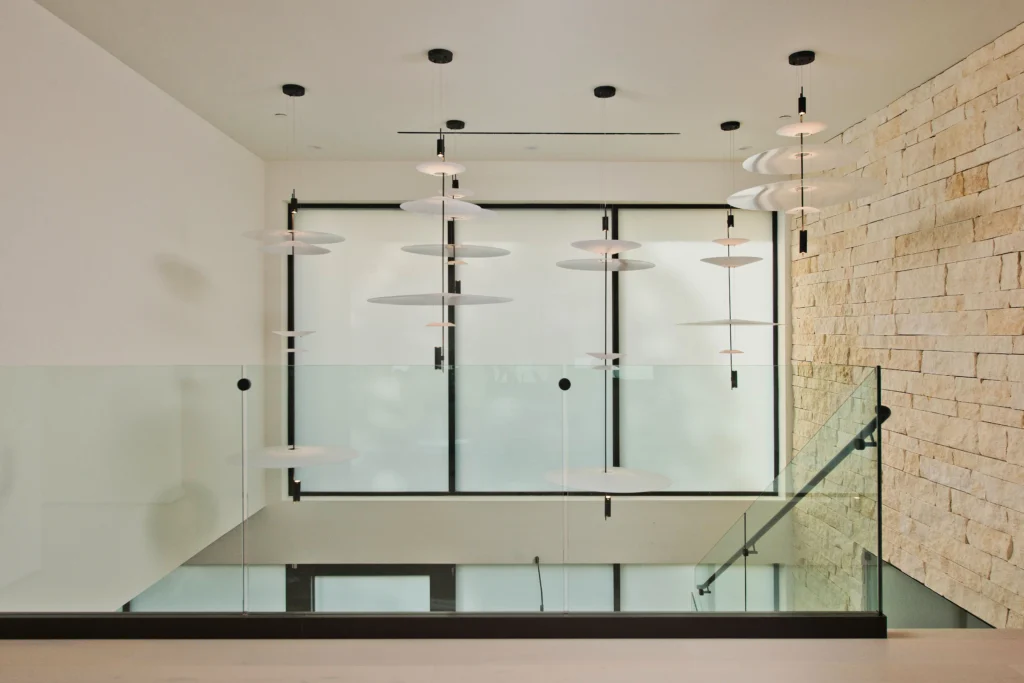
Luxury Modern Estate Encino Foyer Chandelier Detail Glass Staircase Stone Wall

03 Material Continuity and Ceiling Treatment

The strongest indoor-outdoor transitions I design use the same or closely related materials on both sides of the door. Interior stone flooring that continues into an exterior patio, or an interior wood ceiling that carries into a covered outdoor room, creates a physical connection that reinforces the visual one.

The exterior ceiling or overhead structure matters more than most clients expect. A soffited ceiling that extends outside, or a pergola that mirrors the interior ceiling height, contains the outdoor space and gives it the same sense of enclosure that makes interior rooms feel grounded. An uncovered outdoor room directly adjacent to an interior space can feel unresolved, like a room without a ceiling.

As we move into 2027, the indoor-outdoor great room is becoming a baseline expectation in the high-end Los Angeles residential market rather than a premium feature. Clients are asking for these connections in renovation projects where the architecture does not naturally support them, which pushes more of this work into the structural phase of the project. If you are considering this kind of opening, the earlier it is in the project conversation, the better the result will be.

Start a Conversation

We would love to hear about your project.

Contact Us
Continue Reading