
Blog

Layered Lighting: The Detail That Changes Every Room

Sarit Saruri
By Sarit Saruri Interior Conception Los Angeles Interior Design Studio
Layered Lighting: The Detail That Changes Every Room
Lighting is the element of interior design that clients invest the least in relative to the impact it has, and the one I spend the most time advocating for on every project. A room with beautiful finishes and strong furniture but flat overhead lighting will never feel right. The same room with a considered lighting plan, even with more modest finishes, will feel warm, comfortable, and finished in a way the first room cannot achieve. Layered lighting is not a technique. It is a principle: no single light source should do all the work in a room. Different sources serve different functions and create different qualities of light. Understanding what those functions are and designing for them is what separates a lighting plan from a lighting installation in a luxury home renovation.
01 The Three Layers

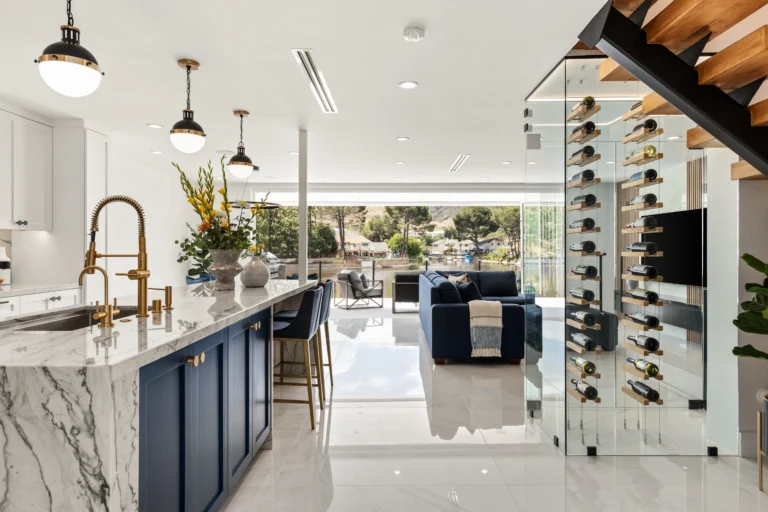
Ambient lighting provides the general illumination of a space. In a well-designed room, this is not overhead can lights flooding the ceiling uniformly. It is often a combination of indirect cove lighting, carefully placed recessed fixtures, and occasionally a central statement fixture that contributes light as well as a design moment. The ambient layer should be sufficient to move around and use the room comfortably, not so bright that it flattens the space and washes out the material choices you invested in. Task lighting serves specific functions: reading, cooking, working, applying makeup. Under-cabinet lighting in the kitchen, a directional sconce at a reading chair, and mirror lighting in a primary bathroom vanity are all task lighting. This layer is often the most directly functional and the one clients notice most immediately when it is absent. Accent lighting draws attention to specific elements: art, architectural details, a stone feature wall, a bookcase. It adds depth to a room by creating focal points and varying the luminance across the space. It is also the layer most frequently omitted in renovations where lighting was not prioritized, and its absence is part of what makes many beautiful rooms feel slightly flat or uninhabited even when the furniture is strong.
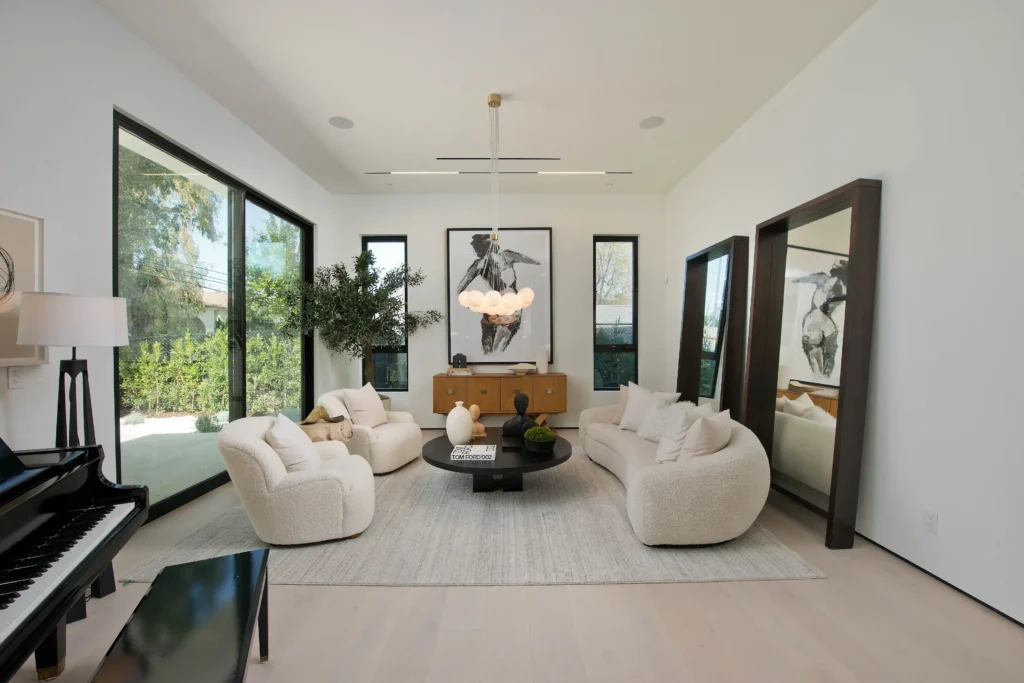
Luxury Modern Estate Encino Sitting Room Curved Sofas Grand Piano

02 What Makes the Difference in Practice

Every circuit in a well-designed home should be on a dimmer. This is not optional at the level of a luxury renovation in Los Angeles. The ability to adjust light levels based on the time of day, the activity, and the mood is fundamental to the quality of the living experience. Lighting at full intensity in the evening is almost always wrong. The same lighting at 25 to 40 percent is often exactly right. Color temperature is the other variable with the most impact. Warm white at 2700K is appropriate for most living spaces. Cooler temperatures (3000K to 4000K) are appropriate for task environments like kitchens and home offices where visual acuity matters more than ambiance. Mixing color temperatures within a single room at very different levels tends to look unresolved and undercuts the quality of the space.
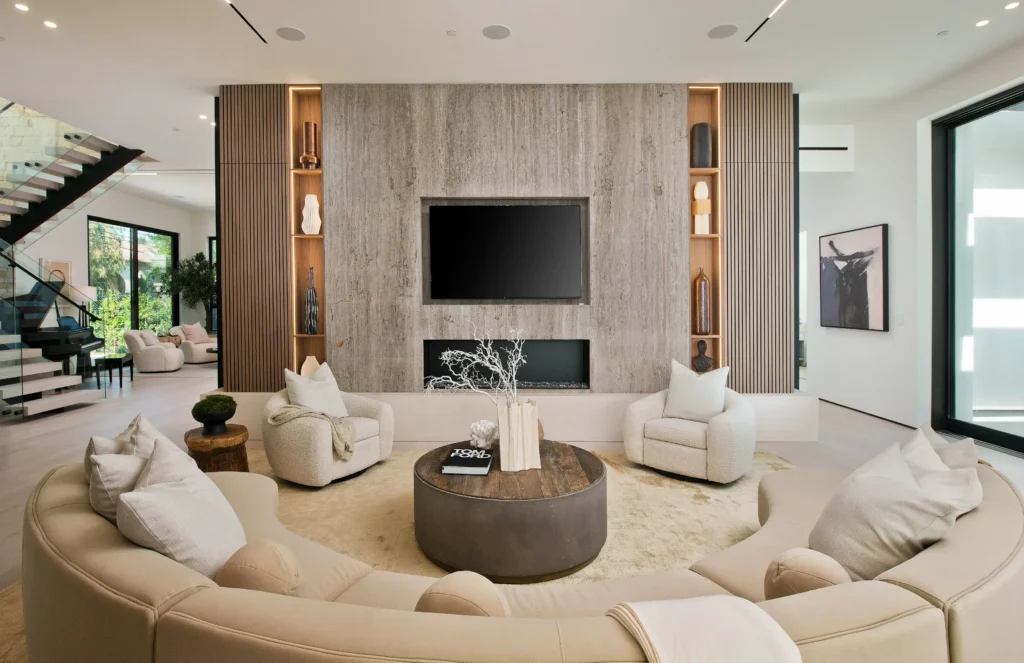
Luxury Modern Estate Encino Living Room Fireplace Wall Wood Slat Shelving

03 Looking Ahead to 2027

Smart lighting systems that automate scenes based on time of day, occupancy, and programmed preferences are mature enough that they are a realistic recommendation for high-end residential projects now, not a luxury niche product. For a new construction project or a full renovation in 2026 or 2027, designing for a smart lighting system from the rough-in stage rather than trying to add it later produces a significantly better result at lower cost and is increasingly expected in the Los Angeles luxury residential market.

Start a Conversation

We would love to hear about your project.

Contact Us
Continue Reading